Why your website visibility strategy must evolve now – and how to lead the change
Introduction: The Optimization Stack Is Changing
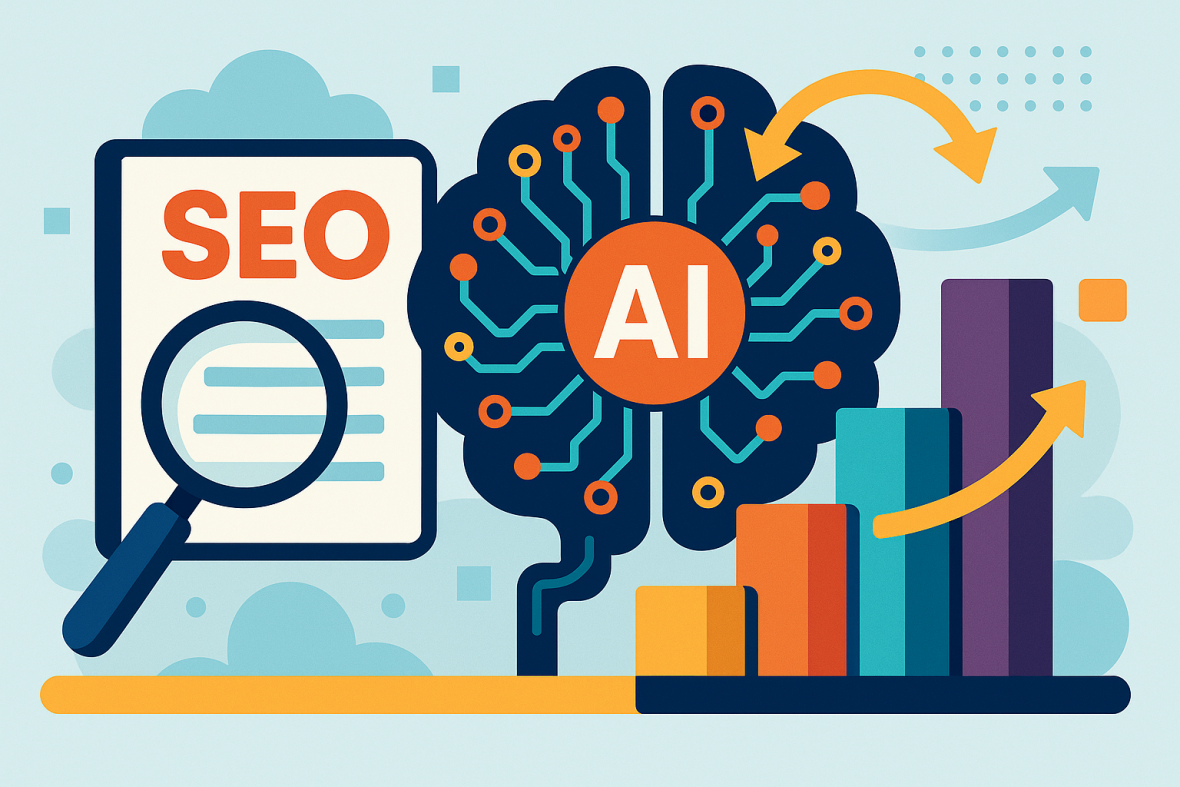
For decades, the SEO playbook has been fairly stable: crawl → index → rank. You optimize your site for search-engines, build links, chase keywords, and hope to land on page one of Google Search. But now everything’s shifting.
As highlighted in Search Engine Journal’s article “The New Optimization Stack: Where SEO Meets AI Retrieval” by Duane Forrester, the discovery stack is evolving—from simple crawling and indexing toward retrieval and reasoning.
In short: It’s no longer enough to rank high—your content needs to be retrieved by AI systems and then reasoned about. If your content isn’t picked up in that pipeline, you’re invisible.
1. Crawl & Index → Retrieval & Reasoning
The Old Paradigm
Traditional SEO: Search engines send a crawler, grab your site, index it, then include it in the ranking algorithm. Your job: technical SEO, keyword optimization, backlinks, content quality.
The New Paradigm
According to Forrester and other industry thinkers, we’re now in an era of AI-Retrieval:
- Large Language Models (LLMs) like ChatGPT, Google Gemini, and others don’t rely purely on ranked lists—they use Retrieval-Augmented Generation (RAG) to fetch relevant sources then synthesize answers.
- Visibility now means “Is my content retrieved by the system?” and “Is it used as reference in generated answers?”
- Authority and attribution become more about citations inside AI answers rather than mere link counts.
Why This Matters
- Zero-click answers are on the rise—users get information directly in the answer interface, bypassing clicks.
- Traditional ranking signals may still help retrieval, but they may not guarantee citation or usage in generated output.
- As Forrester warns: your content may be in the index, yet still not appear in the answer feed, rendering you invisible in important contexts.
2. The Four Pillars of the New Stack
Here’s how the optimization stack has expanded:
| Layer | Focus | Practical Implication |
|---|---|---|
| Technical / Crawlability | Ensure bots (and AI retrievers) can access and parse your content | Robots.txt, structured data, site speed, indexation still matter |
| Content Quality & Semantics | Content must satisfy user intent and be structured for machine reading | Use clear headings, metadata, schema, answer-friendly formats |
| Authority & Trust Signals | Being cited matters more than just ranking #1 | Earned media, authoritative backlinks, brand mentions help AI trust you |
| Citation & Answer-Usage Optimization | Ensure your content is used within AI outputs | Use lists, tables, concise definitions; answer common queries intimately |
3. Three New Optimization Imperatives
A) Optimize for Retrieval
Make sure your content is discoverable by AI systems:
- Use semantic clusters & synonyms to cover diverse query forms.
- Ensure your site is technically ready (indexation, schema.org markup).
- Build content hubs to signal depth and topical relevance.
B) Optimize for Citation
Getting retrieved is step one—being used is step two.
- Craft content that can be quoted, summarized, or referenced.
- Ensure clear author/brand information, structured summary blocks, key facts.
- Create content formats that AI models favor (e.g., “What is…?”, “How to…”, numbered lists).
C) Optimize for Answer Context
Think like an AI generating an answer:
- Include direct answers at the top of your pages (e.g., a quick definition).
- Use tables, bullet points, FAQs for machine-friendly structure.
- Monitor citations of your domain in AI responses (emerging metric: Share of AI Voice).
4. Fresh Insights You Need to Know
Here are a few extra takeaways beyond the original article:
- Generative Engine Optimization (GEO): A term for optimizing content so that generative AIs cite your site. Research shows GEO is distinct but builds on SEO foundations.
- Brand mentions matter more: Studies show AI systems favor third-party sources with strong authority signals. So investing in PR, brand mentions, guest posts increases your chance of being cited.
- Monitoring for AI citations is emerging: For example, platforms like Semrush and Wix now offer “AI visibility” tools to track how often your domain appears in generative output.
- Zero-click doesn’t mean zero value: Even if users don’t click your link, being cited still builds brand trust and downstream visits, so don’t treat zero-click as failure.
5. Your Action Plan: 5 Steps to Upgrade Your Stack
- Audit crawlability: Make sure pages are accessible, canonical, well-structured, with schema markup.
- Build answer-focused content: Create pages that answer key questions completely (≈ 300–500 words for quick answer, plus 1 000+ word deep dive).
- Earn authority signals: Secure at least 10-15 high-quality brand mentions or citations outside your domain in the next 3-6 months.
- Track new KPIs:
- Share of AI Voice (mentions in AI-answers)
- Answer Citation Rate (how often your pages are cited when retrieved)
- Continue tracking organic traffic and rankings but add those new metrics.
- Stay agile & test: As AI retrieval systems evolve, continue running experiments: e.g., change markup, test short vs long format, monitor whether content appears in AI answers.
Conclusion: SEO Isn’t Dead — It’s Evolving
Make no mistake: this isn’t about replacing SEO—it’s about expanding it. What Search Engine Journal’s piece calls the “new optimization stack” is built on the same pillars as SEO, just with a twist: retrieval + reason + answer usage. If you adapt early, you’ll have a huge advantage in the next frontier of digital visibility.
The question isn’t whether you’ll show up on page one of Google anymore. It’s whether you’ll be used by an AI, cited in its answer, and trusted by both algorithms and humans.
Tools and algorithms may change, but the fundamentals remain: serve user intent, build authority, be machine-readable. If you do those well—you won’t just be ranking. You’ll be relied upon.